What it actually takes to put connectivity to work across vineyard acres — frost and soil sensors, gate and pump controls, and cameras that cover the blocks.
The vineyard has gotten smart. Frost sensors text you at 3 a.m. before the cold settles. Soil-moisture probes tell you which block actually needs water. Cameras watch the gate and the equipment yard. Pumps and valves you can switch from your phone. None of it works without one quiet thing in the background: a connection that reaches out into the rows.
That’s the part nobody sells you on the sensor box. Here’s what it really takes to wire up the vineyard, in plain terms.
The good news: most of this is light traffic
It’s easy to assume a vineyard full of sensors needs a giant internet plan. It usually doesn’t. A frost sensor sending a temperature reading is tiny — a few bytes every few minutes. A soil probe, a gate status, a pump command: all small. You could run dozens of these and barely register on your bandwidth.
So the challenge across acres isn’t how much data. It’s coverage — getting any signal at all to a sensor sitting in the middle of a forty-acre block, a quarter mile from the nearest building.
Two ways sensors phone home
Vineyard sensors generally connect one of two ways:
- Over your own network — a Wi-Fi or radio link from a building out to the rows, often with a few outdoor access points or a low-power sensor network (the kind built for long range and tiny messages). This keeps everything on your own connection, with no per-device cell bills.
- Over cellular — each device has its own SIM and talks to the carrier. This is simple to deploy but only works where there’s a usable cell signal, and the monthly costs add up fast across many devices.
For a property with solid coverage from the buildings out, running sensors on your own network is usually cheaper and more reliable. The piece that makes it possible is a strong, stable connection at the source — which is where a fixed-wireless link comes in.
Cameras are the heavy part
Sensors are featherweight. Cameras are not. A single high-resolution camera streaming or uploading to the cloud can use more upload bandwidth than a hundred sensors combined. Put several around the property — the gate, the equipment yard, a remote pump house, a vineyard block — and the picture changes.
The thing to watch is upload speed. Cameras send data out to the cloud or to a recorder, and rural connections are often thin on upload. A handful of cameras can quietly saturate the line and slow everything else down. We break the math down in detail in our guide on how many cameras your plan can handle, but the short version: record locally when you can, send only what you need to the cloud, and size your upload for the cameras, not the sensors.
Coverage follows the sightlines, not the roads
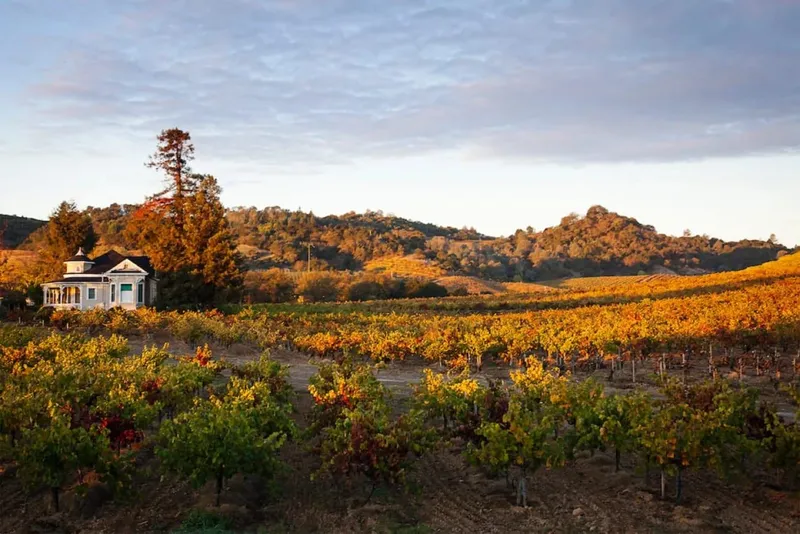
Vineyards are open. That’s actually a gift for connectivity. Where a forested ranch fights trees, rows of vines leave clean sightlines from a building to a distant corner. A small outdoor radio on a barn or a tank can often shoot a clean link to a sensor hub or a camera way out in the blocks — no trenching, no running conduit a quarter mile through the dirt.
Hills and equipment buildings can block the shot, so placement matters. The practical move is to design the network around your real layout: where the buildings are, where the blocks sit, where the gate and the pump house are, and what’s between them. We walk the property and map it before anyone mounts a thing.
Plan for the things you’ll add later
The vineyard you wire this year is not the vineyard you’ll have in five. People start with frost sensors, then add soil probes, then cameras, then automated gates and remote pump control. Each addition leans on the same backbone.
Build that backbone with a little room to grow:
- A strong, stable connection at the main building that won’t be the bottleneck.
- Outdoor coverage points placed where you can extend from them later.
- Local recording for cameras so adding one more doesn’t choke the upload.
- A network you (and we) can actually see and manage, not a tangle of mismatched devices nobody can troubleshoot.
Honest about the limits
Wireless follows line of sight, and a vineyard isn’t always flat. A deep ravine, a stand of oaks on a ridge, a barn in the wrong spot — these are real, and we’ll tell you straight when a corner is going to be hard to reach. Sometimes the fix is a relay; sometimes it’s cellular for one stubborn far device. Either way, you’ll know up front, not after the install.
Start at the source
Every smart-vineyard project rests on one thing: a dependable connection to the property in the first place. If that’s thin, the sensors and cameras feel flaky no matter how good they are.
Run our Check My Address tool to see what AVISP can bring to your vineyard, and we’ll plan the coverage out into the rows from there. Local crew, real walk-through, built for the way your property actually lays out.